Michael Benibgui, PhD
Clinical Psychologist
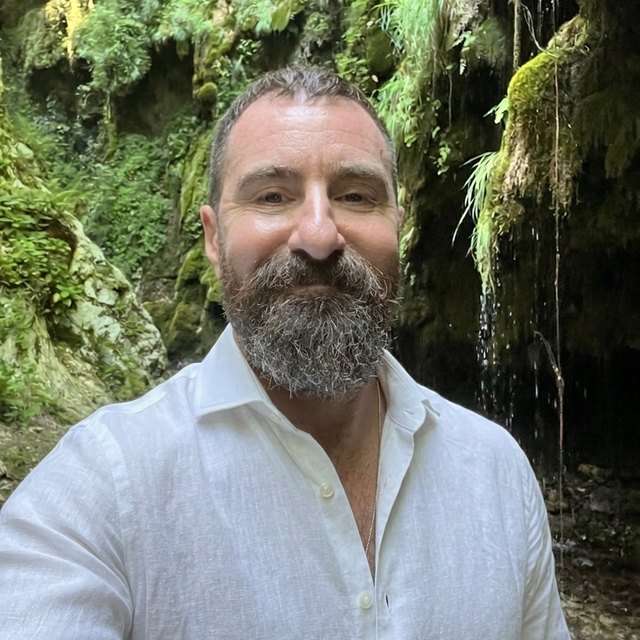
Michael Benibgui is a clinical psychologist licensed in New York and Québec, in practice for twenty-five years.
Who he works with
This is a practice for a small number of adults whose lives carry sustained demand, complexity or intensity. Some are navigating suffering; others are trying to understand how to sustain creativity, responsibility, performance or psychological range without reducing themselves to a diagnosis or a single explanatory frame.
A recurring question is how the same quality can function as strength in one context and friction in another. Intensity, sensitivity, drive, focus and appetite for experience do not have a single meaning. The work is to understand how a particular person is organized, what is costly, what is valuable, and what should become more governable without being diminished.
Training
He trained at McGill, Concordia, NYU, and Columbia, with doctoral work spanning clinical psychology, neuroscience, and psychoneuroendocrinology. His dissertation received the Canadian Psychological Association’s Outstanding Dissertation Award.
In New York, he was Senior Psychologist and Founding Member of the Center for Optimal Living, where he led clinically and operationally from the practice’s founding.
The approach
The approach is integrative and trauma-informed — multiple fields of evidence-based practice, drawn together and finely tuned to the person in the room.
That includes attention to how early experience and sustained stress can affect physiology, behavior and relationships over time, and to the ways people may adapt and grow after difficult experience.
It cultivates moment-to-moment awareness, and makes room for the rest and recovery a demanding life requires.
It also makes room for questions of meaning, purpose, identity and the kind of life a person wants to build.
Non-ordinary states
Non-ordinary states of consciousness have a place in this work — approached with clinical judgment, as they were long before the current renaissance. Psychedelic integration is offered on a case-by-case basis; often, safer doorways to the same depths exist.
The practice
The practice is selective and conducted personally in English and French. Professional scope, format and location are considered individually and according to applicable licensure and jurisdiction.
A practice shaped by range.
The walking wounded
Much of psychological life is organized around adaptations that once made sense. A defense, habit or way of relating can protect a person for years and later become constraining. The work is not to attack those adaptations, but to understand what they protected, whether they are still needed, and what becomes possible when they no longer have to do so much.
A living plan
The work itself is individualized to the point of being an experiment with one subject: a living treatment plan, adjusted a variable at a time, in whatever form fits the person.
A session may happen on foot through a park as readily as in a chair. Attention may be returned to the present midway through a difficult subject. The setting itself may change, when a change of setting is what’s needed.
And it runs on one rule that sets it apart from the rest of a demanding life: no performance demands. Observation, never grading.
How people arrive
Some people arrive on the precipice of a change they have already chosen, needing only steadiness — accountability without pressure, a nudge that doesn’t push. Helping someone take that first step is a discipline of its own — one Dr. Benibgui trained in formally at Columbia, and went on to teach.
Others arrive with no problem to declare at all: thinking to be done, decisions to be turned over, in good company. That, too, is the work.
Honest expectations
There is no prescribed destination and no promised timeline. Honest psychotherapy cannot guarantee transformation on a schedule, and a reader should be wary of anyone who does.
Every life on its own terms
Trauma may be dramatic and unmistakable, or cumulative and difficult to name. Its significance is not determined by comparison with someone else’s suffering.
A life is best understood on its own terms, in its own cultural, relational and historical context. Comparison can obscure as much as it clarifies.
How change arrives
And beneath all of it, always at work in the background: the slow disarming of defenses — a gentle touch, light humor, sometimes a roar of shared laughter when the moment allows it. That is when the beautiful things happen, even in conversation about painful experience — especially then, looking back.
Insight here rarely arrives as the famous aha, though it sometimes does. More often it announces itself quietly: a hmm. A smile. A pause.
The wider field.
dynamical-systems approaches to mood · process-based therapy · predictive processing & allostasis · neuroimmune models · memory reconsolidation · psychoplastogens & critical-period plasticity · motivational interviewing · the integral, transpersonal & contemplative lineages
Traditions inform the work; current models keep it honest.